← All work

Deliveroo

Director of Product Design, Delivery & Logistics

I lead Product Design, Content Design & Localisation for Delivery & Logistics at Deliveroo (now part of DoorDash) across over 40 markets globally. My work shapes the systems that connect consumers, riders, and merchants — and how millions of people experience delivery every day.
Oct 2025 — Present Maternity cover London, UK
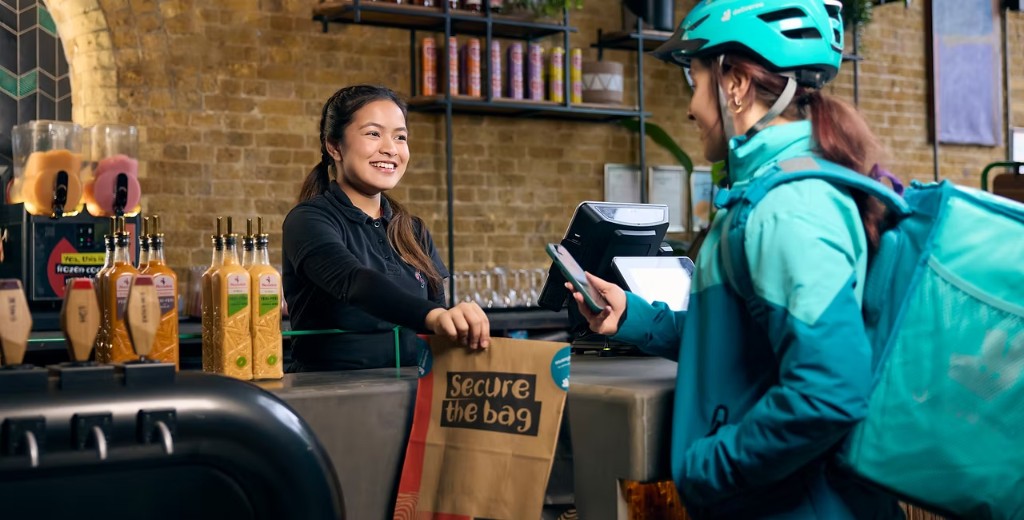
Deliveroo rider collecting an order

Designing for a three-sided marketplace

Deliveroo is a three-sided marketplace — consumers who want great food, riders who deliver it, and merchants who prepare it. Now part of DoorDash, it operates across over 40 markets globally.

I look after the design of the systems that make this work — from how customers place orders, to how they're dispatched and routed, to what the rider sees on the ground.

It means holding several perspectives at once. What's good for speed might not be good for riders. What's efficient for the business might feel worse for customers. Getting the details wrong has real consequences for real people.

Insight-led design direction across audiences

Good direction starts with actually understanding what's happening. I use the latest AI tools to work through thousands of rider and consumer feedback signals — and find the patterns that matter.

It's not a side project; it's how I figure out what we should work on next, based on what people are actually telling us.

From there, I work with Product, Engineering, and Analytics to turn those insights into a clear plan — what we're going to do, why it matters, and how we'll know it worked.

I set direction that everyone can get behind because it's grounded in real feedback, connected to business goals, and clear enough that the whole team knows where we're heading and what value it brings to our audiences.

Prioritising what matters across 135k riders

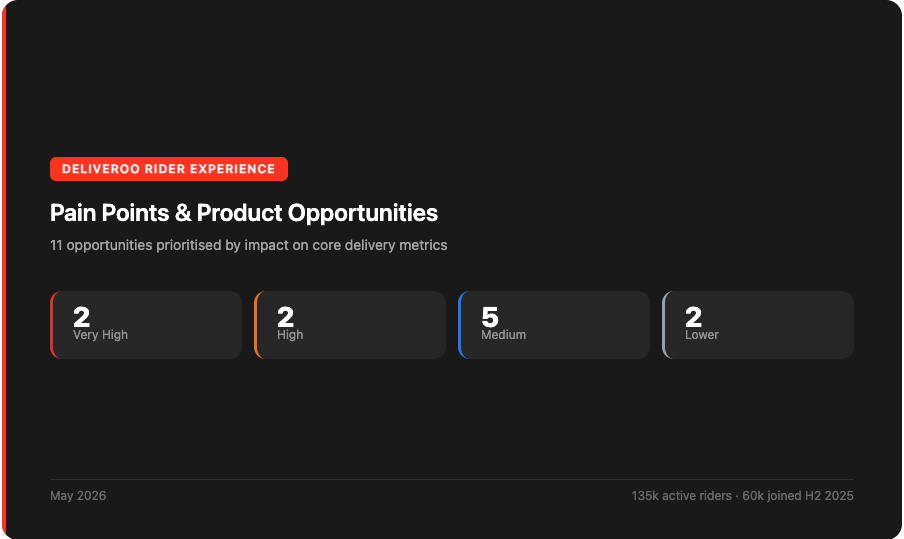
I led a cross-platform analysis of rider pain points across DoorDash, Deliveroo, and Wolt — pulling from thousands of feedback signals, research studies, and operational data to identify and prioritise 12 product opportunities ranked by impact on core delivery metrics.

The work combined qualitative research from Dovetail, quantitative data from Snowflake, and rider feedback from all three platforms — then shaped it into a clear, tiered roadmap the whole team could act on.

This wasn't a backlog exercise. It was about building a shared understanding of where rider experience breaks down — and making a case for fixing the things that move acceptance rates, delivery times, and rider retention at the same time.

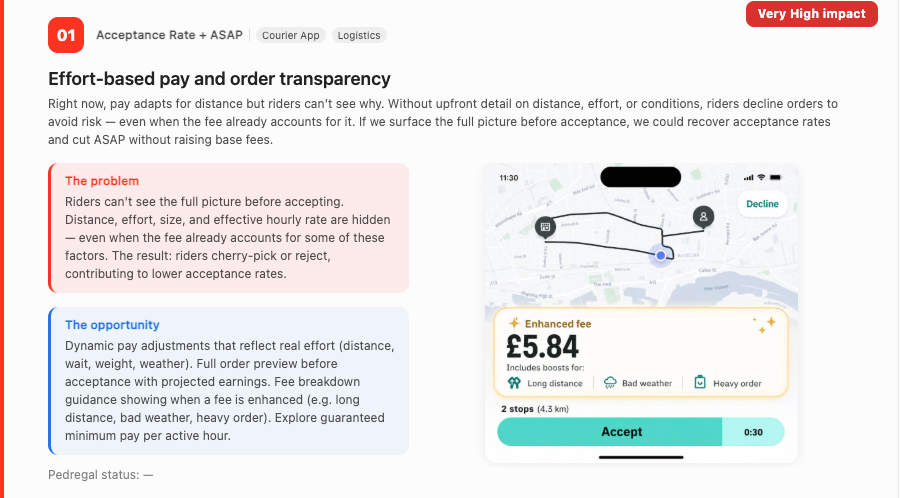
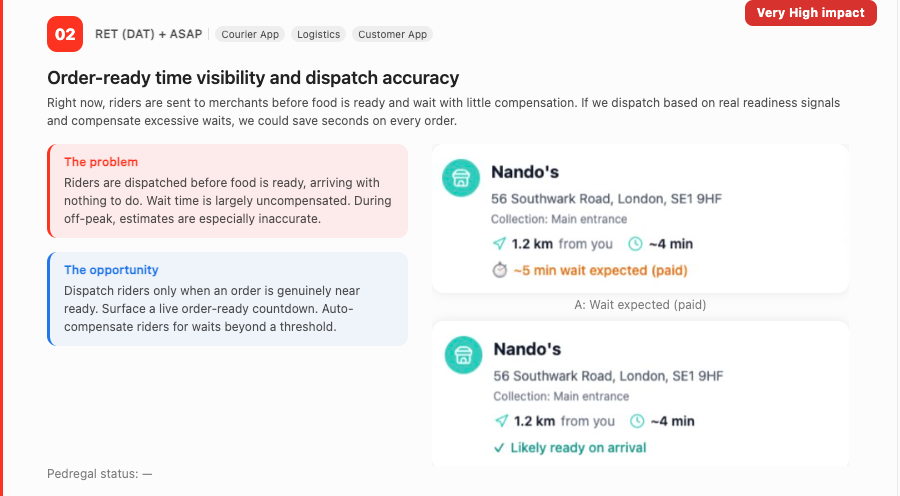
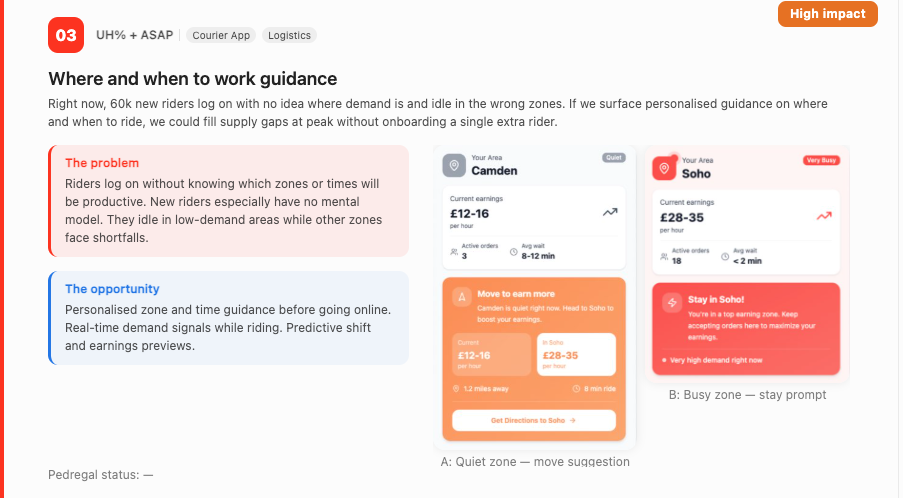
For each opportunity, I explored quick design concepts that show how these changes would feel in practice — from transparent offer screens to smarter dispatch and better last-mile guidance.

Rider pain points and product opportunities — title slide Effort-based pay and order transparency — very high impact opportunity Order-ready time visibility and dispatch accuracy Where and when to work guidance — zone demand signals and earnings previews

Improvements my team have shipped

Unifying DoorDash, Deliveroo & Wolt

Following the acquisition, we're bringing DoorDash, Deliveroo, and Wolt together into one product suite. That means redesigning core experiences so they work consistently across all three brands — while keeping what makes each one distinctive.

I lead the design of how the logistics and delivery layer comes together — the systems that dispatch riders, route orders, and handle the complexity that customers never see but always feel.

It touches everything: navigation, order flow, rider experience, merchant tools. Millions of people across over 40 markets need it to feel seamless, regardless of which brand they know.

Cross-functional, technically complex, and deeply tied to real people's daily experiences. It's exactly the kind of work I do best.

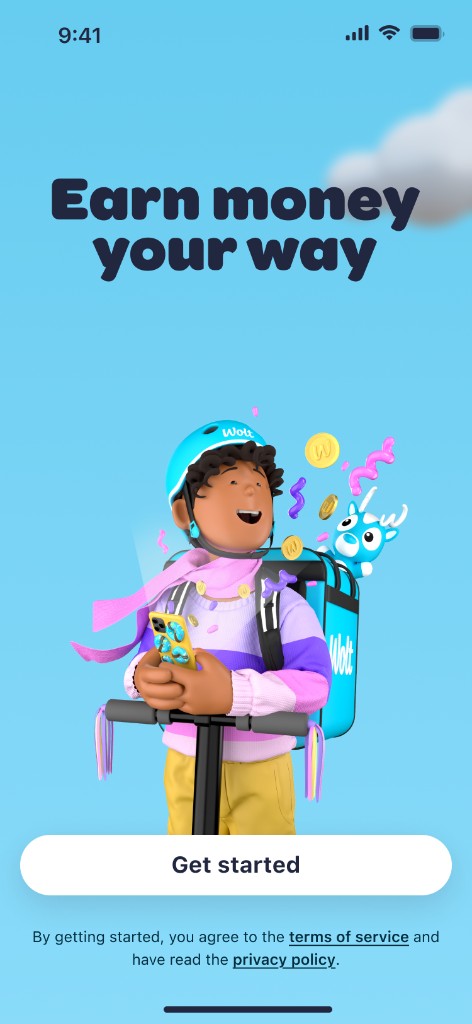
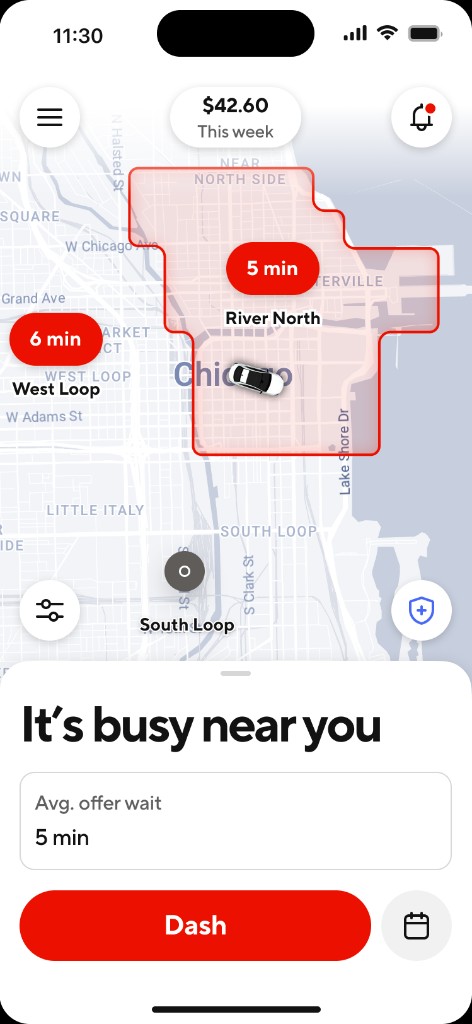
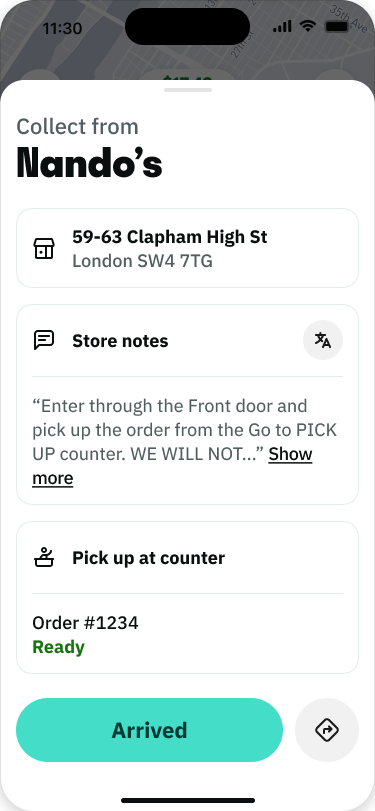
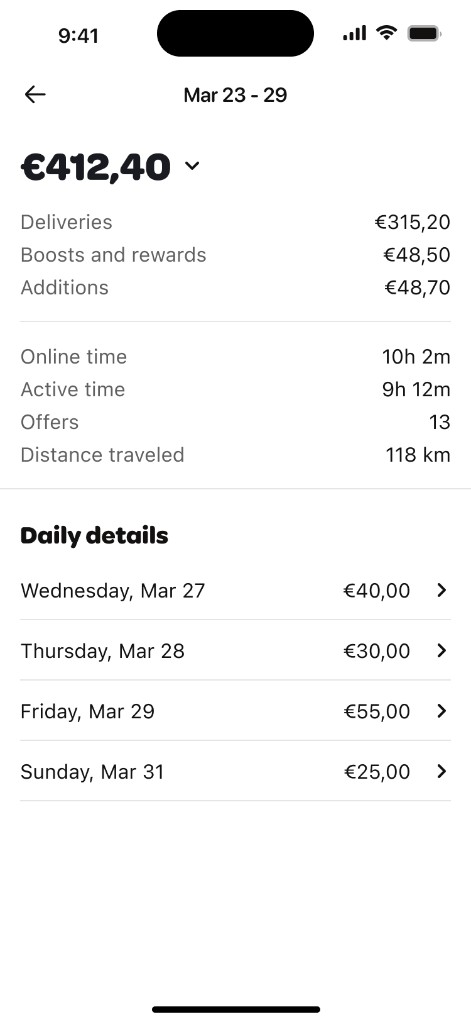
Wolt courier onboarding — Earn money your way Collect from merchant screen with store notes and pickup details DoorDash dasher map showing busy zones and dash button Weekly earnings breakdown with deliveries, boosts, and daily details

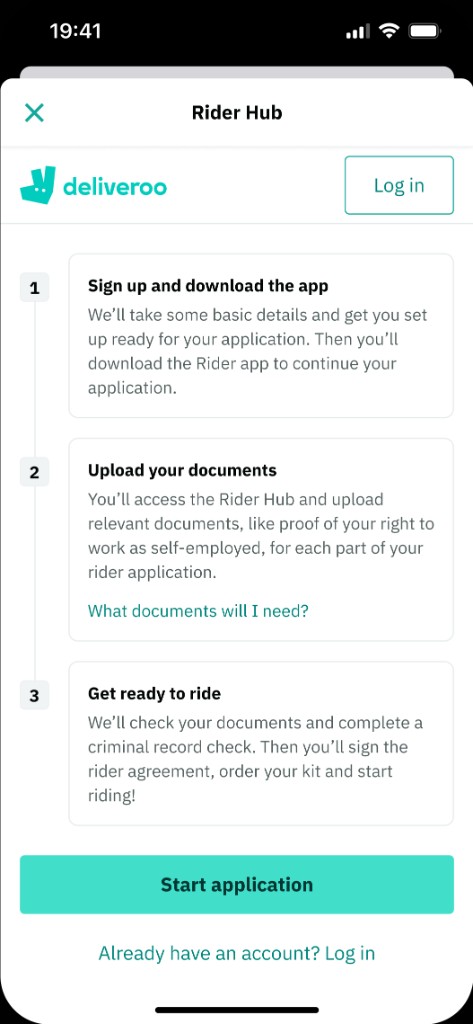
Rider onboarding optimisation

Shipping soon

New riders used to bounce between the app and a separate web hub just to get started. We brought the whole onboarding flow into one place — fewer drop-offs, more riders on the road, and a much less confusing first experience.

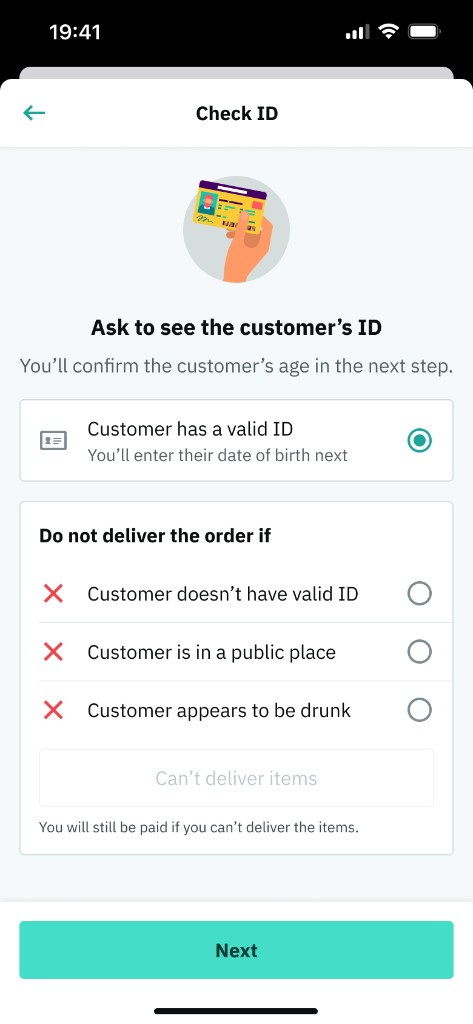
ID checks for age-restricted products

Shipping soon

Riders delivering alcohol or other age-restricted items need to verify the customer's ID. We designed a scanning flow that makes compliance straightforward — so riders aren't left guessing and customers get their orders without friction.

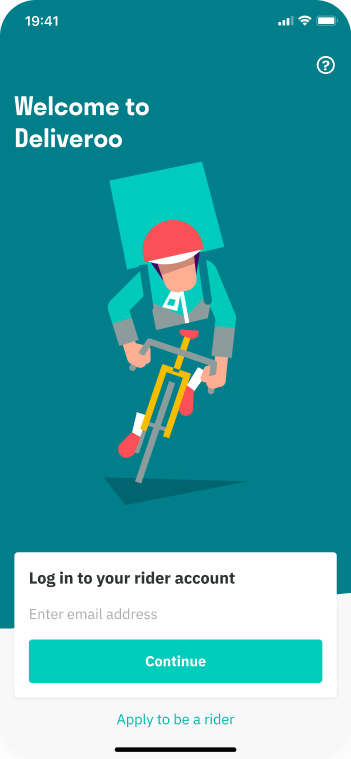
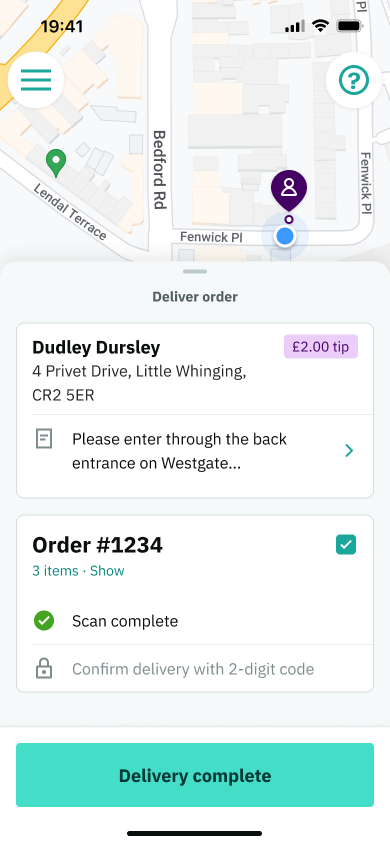
Welcome to Deliveroo rider login screen Rider Hub onboarding steps — sign up, upload documents, get ready to ride Check ID screen for age-restricted deliveries Deliver order screen with customer address and tip

Consumer delivery features I've shaped recently

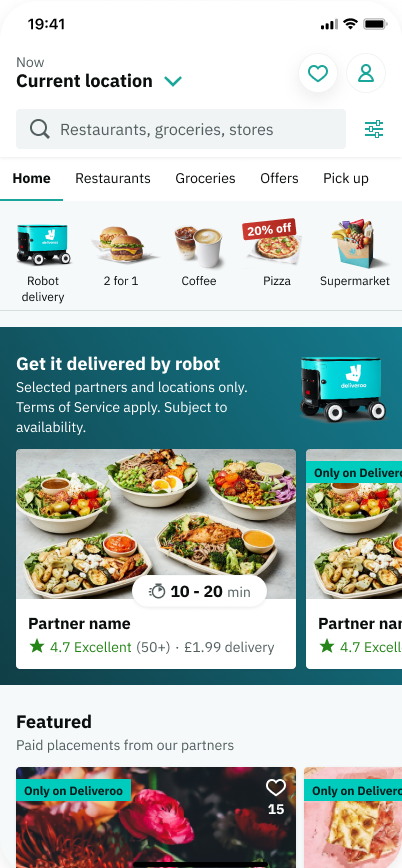
Pavement robot deliveries

Shipping soon

Customers can now get deliveries by pavement robot. I worked with the robotics team to design the end-to-end experience — from placing the order to collecting it from the robot at your door.

Leave at safe place redesign

Ready to build

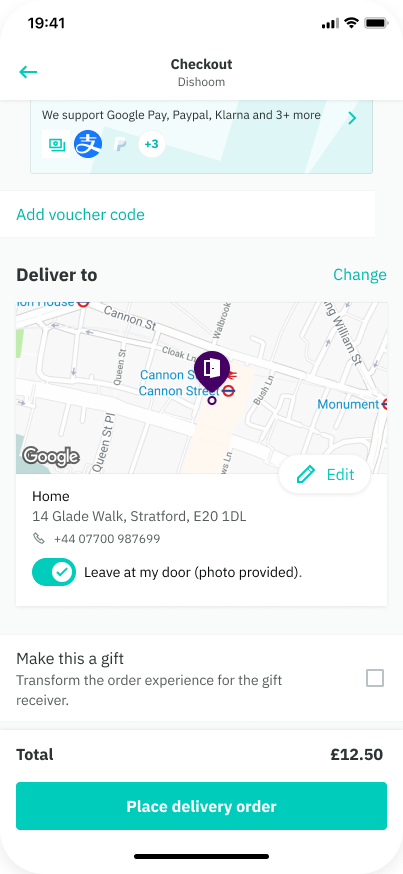
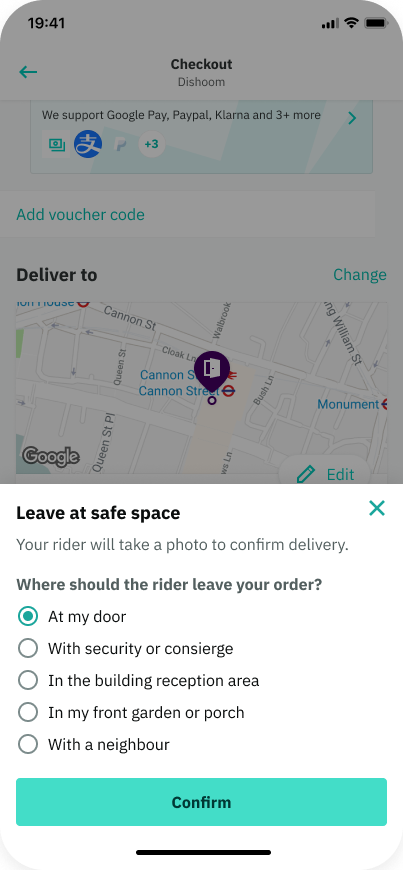
Researched how customers actually use the "leave at safe place" option, then redesigned the flow to make it more visible and easier to use. The result: smoother contactless deliveries for people who prefer them.

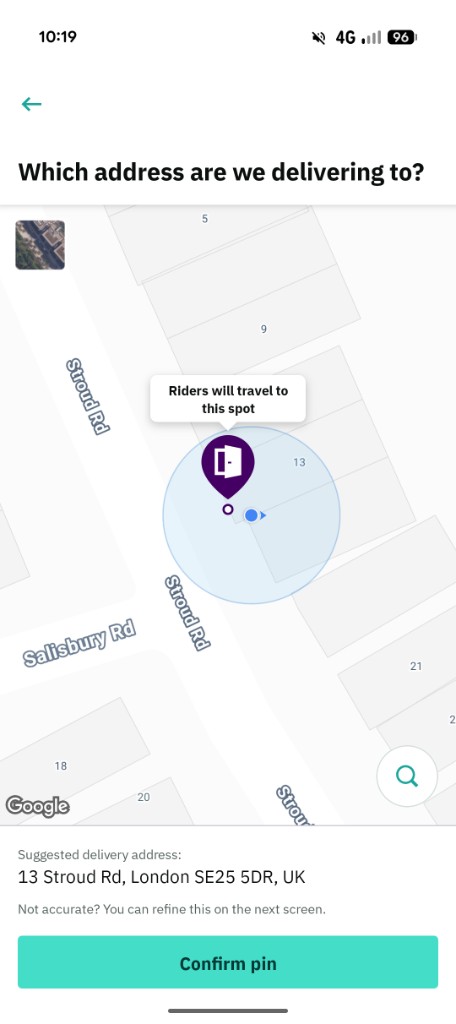
Deliveroo home screen showing robot delivery category Checkout with leave at my door toggle enabled Leave at safe space bottom sheet Which address are we delivering to — confirm pin screen

Verified address flow

Shipping soon

When a customer confirms their exact location, the rider gets precise directions instead of circling the block. Fewer failed deliveries, less waiting around for everyone.

Blue dot customer location

Live experiment - performing well

A blue dot on the checkout map lets customers see exactly where their delivery pin is — and move it if it's wrong. A small change, but it means riders find people faster and fewer deliveries fail.

AI as an everyday design tool

I use Cursor and ChatGPT every day — not as experiments, but as core working tools. I pull insights from feedback data, explore design concepts faster than I could alone, and build tools that change how we approach design and localisation across all DoorDash brands and markets.

It's changed how quickly we go from "I think there's a problem here" to "here's a working version we can try." I can build it, show it, and learn from it — often in the same week.

My whole team uses these tools too. Designers build their own internal tools, automate the tedious stuff, and prototype ideas that directly shape what we ship. It's not about replacing craft — it's about closing the gap between having a good idea and showing why it works.

The result: we do more with the time we have. This site was built entirely in Cursor with care and attention required to ensure a true and accurate overview of my achievements and strengths.

Building high-performing design teams

I lead Product Designers, Content Designers, and Localisation specialists — embedded across cross-functional squads with the context to make good decisions and a strong design community around them.

What matters most to me is the people. I care about my team as individuals — how they're doing, what they need, where they want to go. I create an environment where it's safe to take risks, feedback is honest, and people feel supported enough to do work they're proud of.

When people feel genuinely looked after, the quality of their work follows. The teams I'm proudest of aren't just the ones that shipped great things — they're the ones where people felt cared for.

Measurable outcomes

4.6★ App Store rating
88% Rider-app satisfaction score
$6.5M Savings delivered through delivery time, cost and efficiency improvements

Why this experience matters

  • Complex product, multiple audiences: Designing for consumers, riders, and partners simultaneously — balancing competing needs across a three-sided marketplace, similar to how Skyscanner balances travellers, airlines, and partners
  • Setting design direction: Owning the vision for my area and defining what good looks like — holding the quality bar while shaping what gets built and why
  • Working in the product triad: Partnering closely with Product, Engineering, Operations, and Analytics to shape decisions from the earliest stages — not designing in isolation
  • Delivering at scale: Millions of deliveries a day across multiple markets, where every interaction matters and consistency is hard-won
  • AI as a daily tool: Using Cursor and ChatGPT to understand feedback at scale, build prototypes, and help the team move faster — building a point of view on how AI changes the way we design