Unmind

Director of User Experience

Leading Product Design and Research for a platform that helps people look after their mental health at work. Designing for three completely different audiences — employees, managers, and HR leaders — each with their own needs and motivations. I care about taking a holistic view of people's wellbeing and making sure the product genuinely improves their lives, not just meets a business requirement.

Apr 2022 – Mar 2025 B2B Platform 3 User Groups 2.5M+ Users
Unmind platform

A platform serving three audiences with distinct needs

Unmind helps companies support their employees' mental health with science-backed tools and services. The platform serves three very different groups — Employees, Managers, and HR Leaders — each with their own goals, expectations, and ways of measuring success.

As Director of User Experience, I led Product Designers and User Researchers across four product teams: Core Wellbeing & Virtual Coach, Unmind Talk, Unmind for Leaders, and Enterprise Readiness.

I worked closely with Product, Engineering, Data, Marketing, and Science leaders to shape what we built and why — decisions were made together, not passed between teams. I also partnered with Ragged Edge on a full rebrand and built a design system that made both design and engineering faster.

I built the UX team from scratch — hiring, coaching, and creating the conditions for people to do genuinely good work across four product areas. I cared about each person's growth and wellbeing, and tried to build the kind of team where people felt safe to be honest and supported enough to stretch themselves.

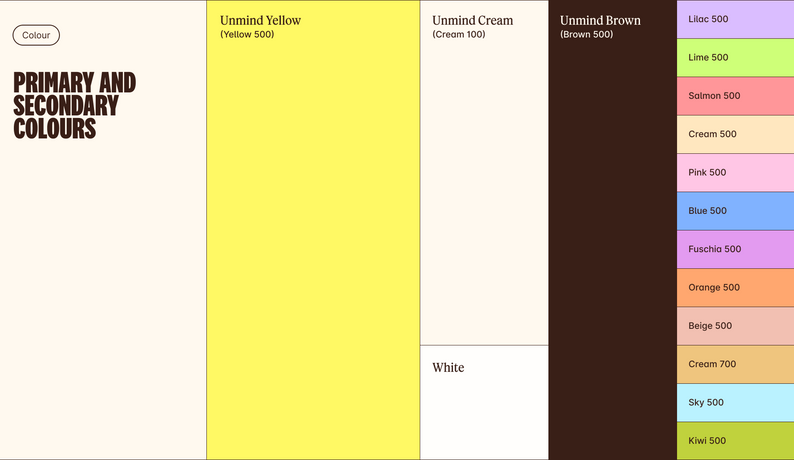
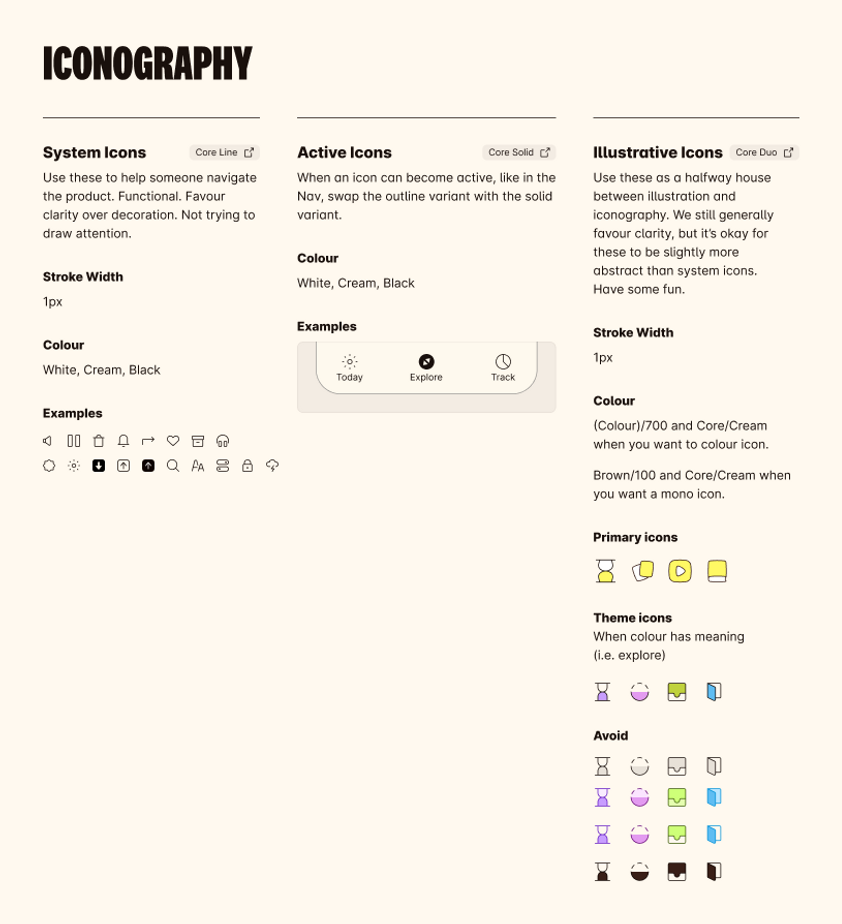
Unmind colour system Unmind icon system
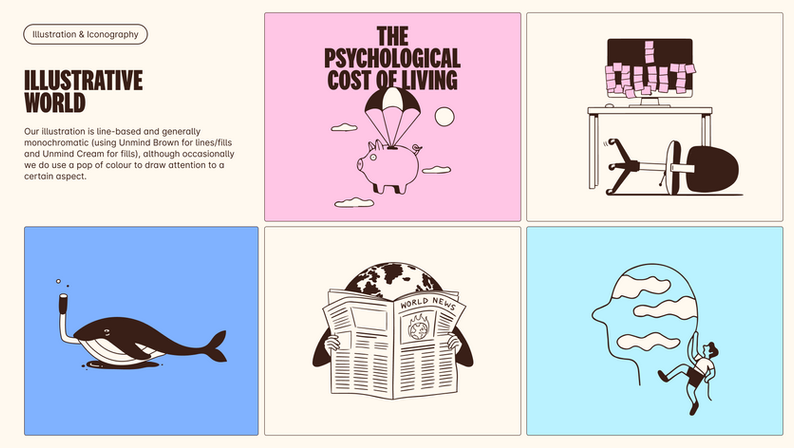
Unmind illustration style

Understanding the employee experience

We ran in-depth qualitative and quantitative research with the Science team to understand how employees actually engage with mental health support at work. Four distinct patterns emerged:

  • Curious Skimmer — browses casually, low commitment
  • The Pragmatist — wants practical, time-efficient tools
  • Mental Health Enthusiast — actively invests in wellbeing
  • Feelings Fighter — struggles but resistant to seeking help

The common thread across all four: finding time. People wanted support that fit into their day — not hour-long programmes that felt like another thing on the to-do list.

This shaped everything we built — from how we structured content to how the product itself worked. We designed for how people actually live, not how we wished they'd behave.

Making mental health fit into the workday

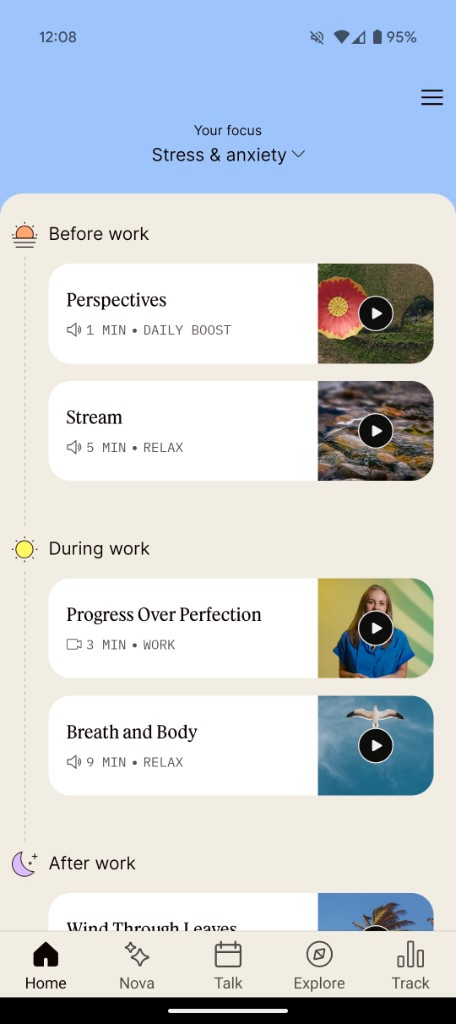
Personalised home page — We rebuilt the core experience around short, goal-oriented content that adapts to each person's needs and progress. The idea was simple: make it easy to do something useful in a spare five minutes.

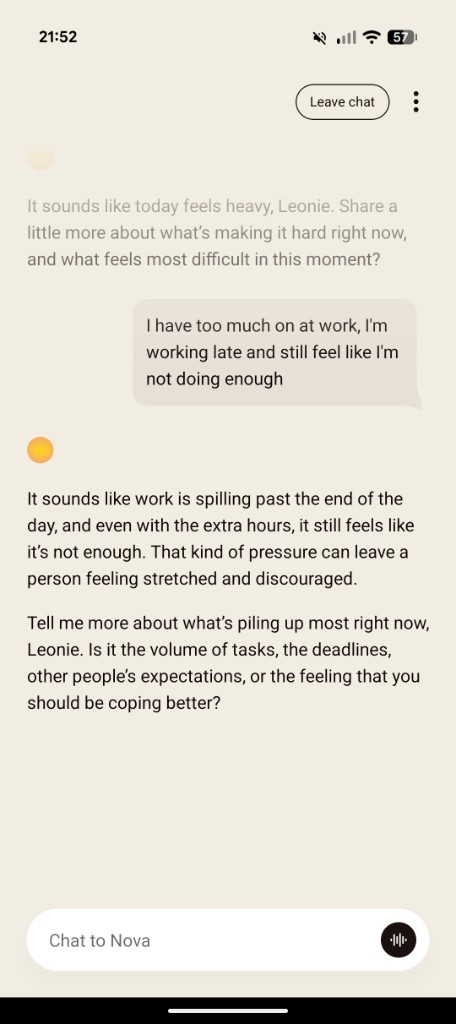
Virtual Wellbeing Coach — A personalised AI coach trained on clinical science, offering guidance whenever someone needs it. We designed it to feel human and safe — and it became the highest-retention feature on the platform.

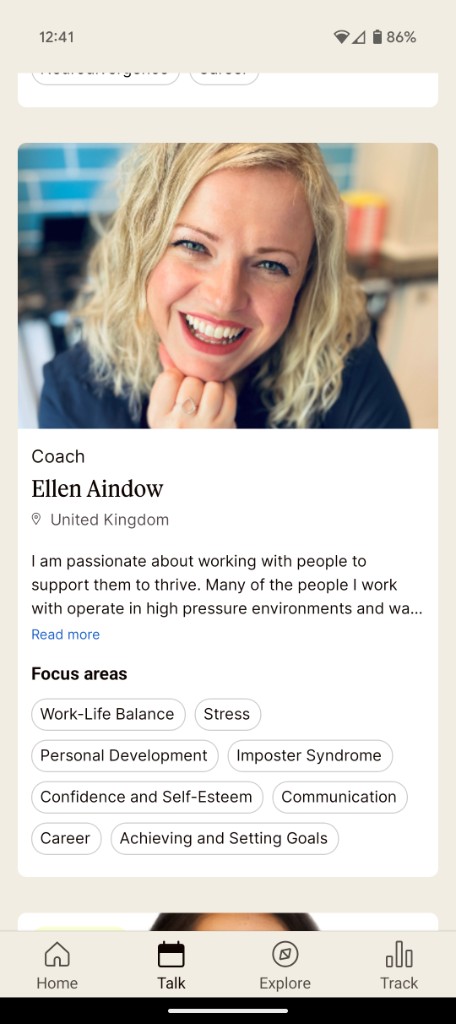
Therapy & Coaching (Unmind Talk) — Live online sessions connecting employees with qualified therapists and coaches. For a lot of people, cost, stigma, and access are the things that stop them getting help — this removed all three.

MS Teams & Slack Integration — We put wellbeing prompts and access directly into the tools people already use every day, because asking someone to download another app is asking a lot.

Unmind personalised home screen Nova AI wellbeing coach conversation Unmind Talk — therapy and coaching

What managers actually need

We interviewed managers across industries to understand how they navigate the growing expectation to support their team's mental health. Three archetypes emerged:

  • The Facilitator — connects team members to resources but avoids direct intervention
  • The Coach — actively supports individuals through regular check-ins
  • The Guardian — feels responsible for team wellbeing but lacks confidence in how to act

The core need: managers wanted ongoing, practical training and easy access to policies and resources they could reach for in the moment — not a one-off workshop they'd forget in a few weeks.

It's a familiar design challenge: giving different people the right tools and information exactly when they need them, not before and not after.

Equipping managers with the right tools at the right time

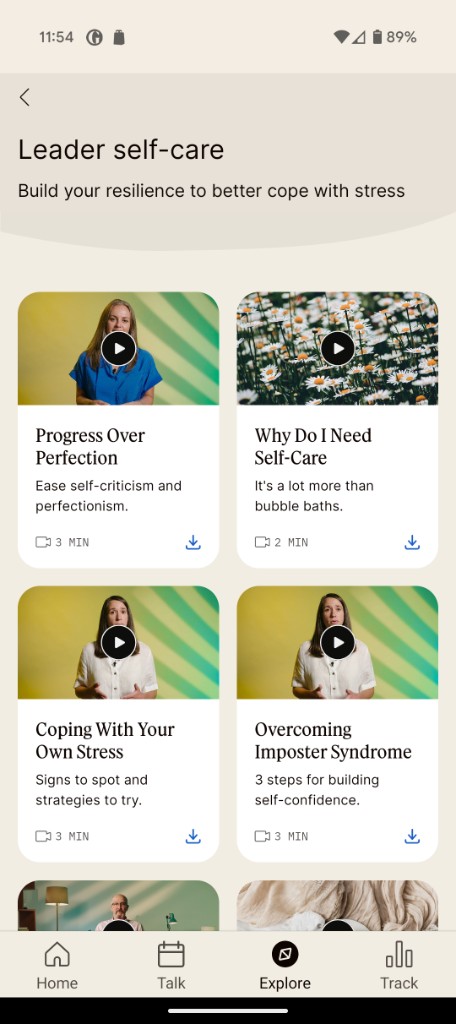
Video-based training — Short modules built with clinical psychologists, giving managers practical ways to spot when someone's struggling and respond well.

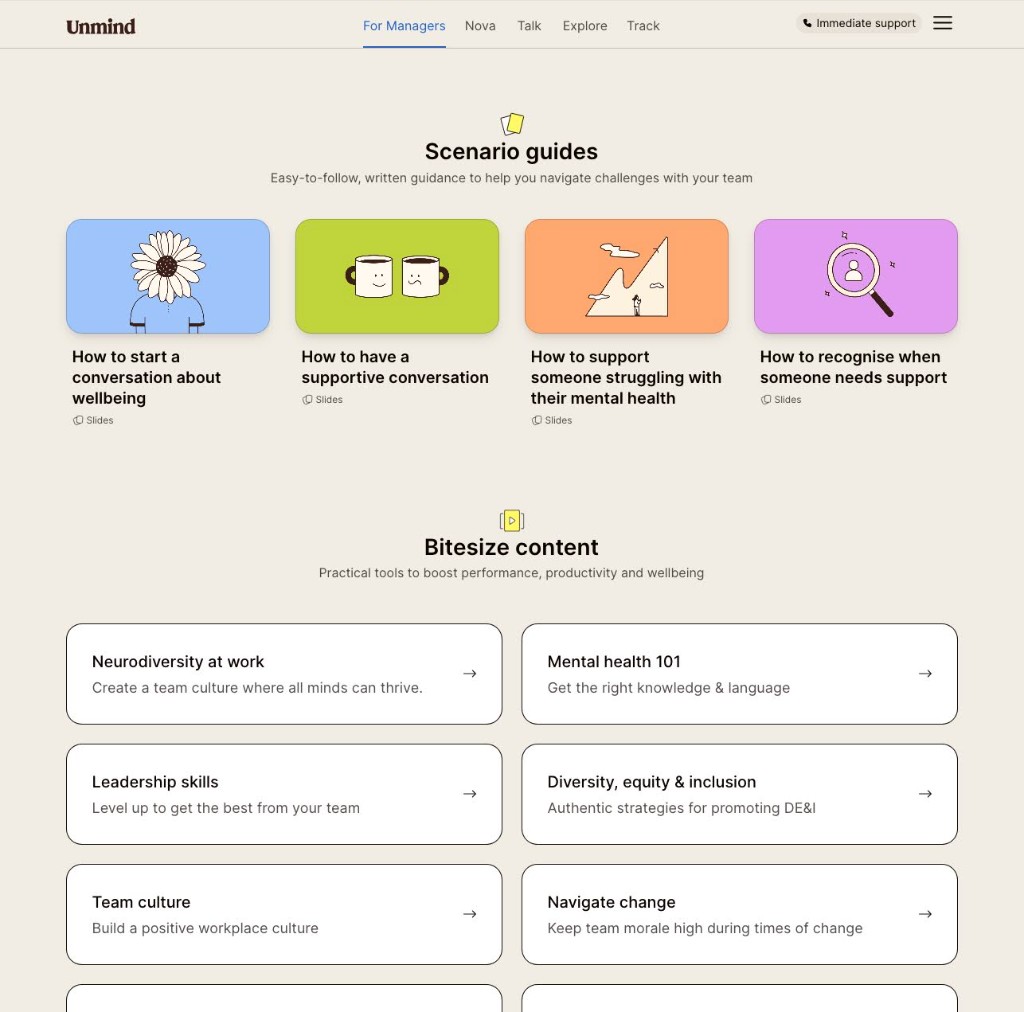
Scenario guides — Interactive guides for real workplace situations — like having a conversation about stress, or supporting someone through bereavement.

Company-specific resources — We let organisations surface their own policies, benefits, and support contacts directly in the manager experience, so people didn't have to go searching.

Unmind scenario guides for managers Unmind manager explore screen

The HR leader's data problem

We interviewed HR leaders responsible for wellbeing strategy to understand their decision-making process and pain points. Two archetypes emerged:

  • The Quick-Win Seeker — needs fast, visible results to maintain stakeholder buy-in
  • The Strategiser — wants deep data to build a long-term, evidence-based wellbeing programme

Both had the same frustration: wellbeing data was scattered across different tools, making it really hard to see the full picture. They needed one place that brought qualitative and quantitative data together so they could show what's working and decide where to invest.

It's a problem that comes up everywhere — leaders need clear, honest data across complex areas to make good decisions.

Giving HR leaders a single source of truth

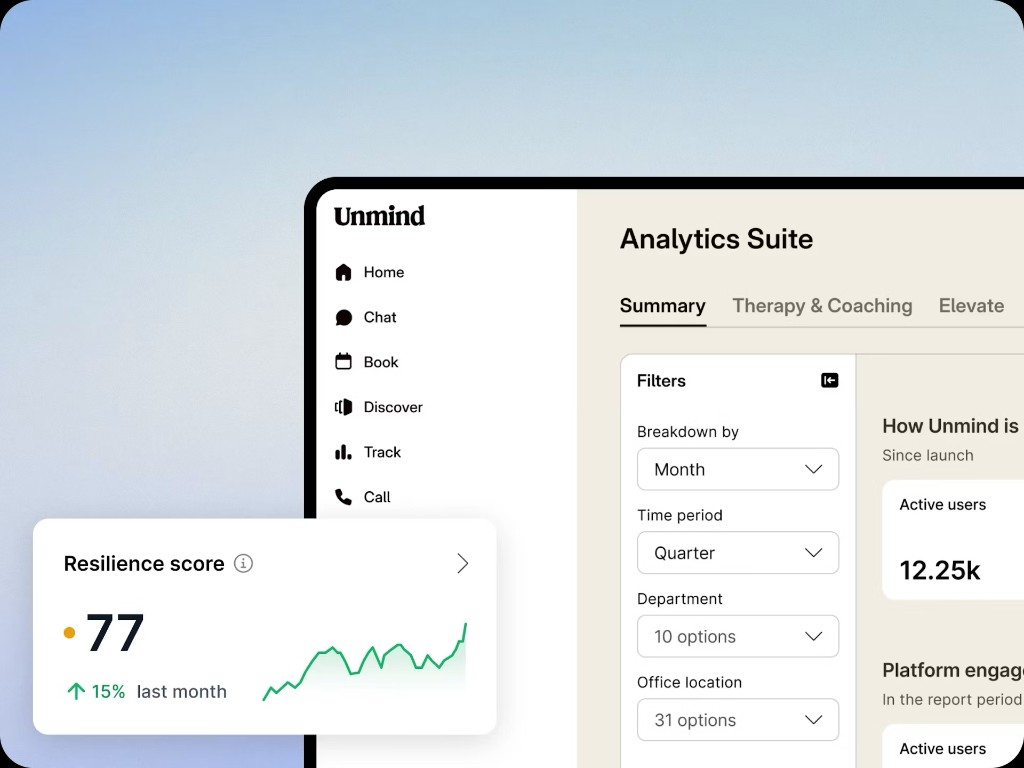
We designed an analytics suite that brought together anonymised wellbeing data, engagement numbers, and qualitative feedback in one place. Dashboards show trends in wellbeing, stress, resilience, and engagement across teams — so it's easy to see where people are doing well and where they need more support.

HR leaders could break the data down by team and location, compare against industry benchmarks, and track changes over time. It helped them make the case that investing in wellbeing actually works.

Unmind Analytics Suite — resilience scores and engagement data

Measurable outcomes across all three audiences

63% Retention rate for Nova (AI coach) users, up from 40% baseline MoM retention — 90% satisfied
84% Retention rate for Talk (therapy) users — 84% satisfaction rate
91% Manager training completion rate — 81% reported increased knowledge, 70% felt more confident
34 Enterprise clients adopted HR analytics, including Bain, KPMG, and Uber
2,500+ Employee groups surveyed across multiple clients, many of whom repeated
40→63% Month-over-month retention uplift driven by personalised, research-led product experiences

What users said

"Being able to access mental health professionals free of charge has been life changing for me."

— Unmind Talk user

"This is the best thing that ever happened. Having a safe space where I can open up and get guidance!"

— Virtual Coach user

"I think it's honestly the best things that our company's ever done putting this service in place."

— Core Experience user